How Jinko's Curveball Works
Jinko can bend spikes and serves, giving you ways to attack around blocks and change where defenders need to receive. The useful part is controlling the landing spot: a dramatic curve only helps when the ball stays in bounds. Start with directional tilt, then adjust power and placement.
Jinko is a limited Secret style built for spiking and serving. Its special mechanic, Curveball, applies curve through directional tilts. Side tilts bend the ball toward the selected side, while backward tilt adds backspin. You can combine backward and sideways tilt to influence the same shot.
| Input or adjustment | Curveball effect |
|---|---|
| Left tilt | Curves the spike or serve toward the left |
| Right tilt | Curves the spike or serve toward the right |
| Backward tilt | Adds backspin; spike behavior depends on facing direction |
| Backward tilt combined with a side tilt | Combines backspin with sideways curve |
| Lower spike power with Advanced Controls | Applies more curve to the spike |
Your facing direction matters, especially with backspin. Avoid treating a tilt as a guaranteed command to hit one fixed area of the opponent's court. Learn how the ball travels from your actual contact position before combining several adjustments.
The goal of your first practice session should be repeatable placement. Pick a starting position and target, then compare left, right, and backward tilt. Keeping the setup similar makes it easier to recognize what each adjustment changes.
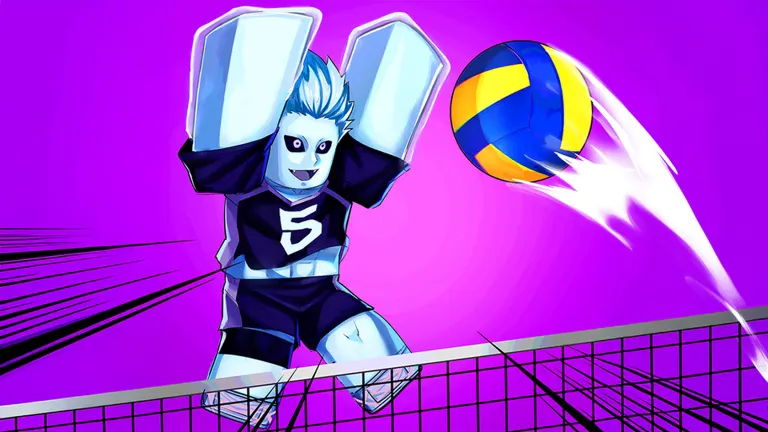
Build Reliable Cuts and Backspin
Cuts around the block
Cuts are a practical next step once basic curve control feels comfortable. In the community's Jinko tips discussion, players recommend combining forward and sideways tilt to attack around blocks while keeping the ball in the front court.
Using the keyboard notation from that discussion, the combination is W + A or W + D. Think of this as forward plus left or right tilt; use the corresponding controls for your setup.
Practice one direction before alternating sides. Aim for an open front-court area and check whether the ball lands there consistently. If it misses, change one element of the attempt rather than changing your position, tilt, timing, and power together.
Backspin as an adjustment
Backward tilt gives you another option when defenders start anticipating cuts. Community advice suggests switching to an S tilt and targeting the back line when opponents move forward to cover a short attack.
That is a placement adjustment, not a promise that pressing backward always sends the ball deep. Curveball's backspin depends on where you face, so rehearse the shot from positions you commonly attack.
| Defensive situation | Adjustment to practice |
|---|---|
| A block covers your direct attacking route | Use a forward-and-side cut toward open front court |
| Receivers move forward expecting a cut | Switch to backward tilt and aim deeper |
| Receivers stay deep expecting the longer attack | Return to a front-court cut |
Another community suggestion is coordinating a wide set, delaying briefly, and then spiking back into the court. Treat this as a timing drill with your setter. The useful lesson is learning how a different contact position changes your available angle.
Avoid relying on slingshots for every attack. Community players specifically caution against repeating them, particularly as opponents become better at reading Jinko. A dependable cut and a practiced alternative give you more useful choices.
Control Power on Spikes and Serves
With Advanced Controls, lower spike power produces more curve. Jinko's serves follow the same relationship between hit power and curve: reducing power increases the bend.
This makes power part of your aiming process. If an attempt bends away from your intended landing area, adding even more curve is unlikely to solve the placement problem. Compare nearby power settings while keeping your direction and starting position consistent.
Use this sequence to learn the relationship:
- Choose a target area with room around it.
- Start from a repeatable contact position.
- Hit several attempts using the same tilt and power.
- Reduce power and compare the resulting curve.
- Keep the setting that gives you the most reliable placement.
- Repeat from another position after the first setup feels consistent.
For serves, learn sideways curve and backspin separately before combining them. Practice landing the ball reliably, then introduce changes in direction and power. This gives you a clearer idea of whether a missed serve came from your aim or your curve adjustment.
Do not judge every attempt against an old highlight clip. The Jinko wiki's balance history records an August 30, 2025 nerf that substantially reduced Curveball spin with Advanced Controls. Demonstrations recorded before that change may show bends that are harder to reproduce afterward.
Use your own repeatable results as the benchmark. Increase difficulty once you can place the simpler version consistently.
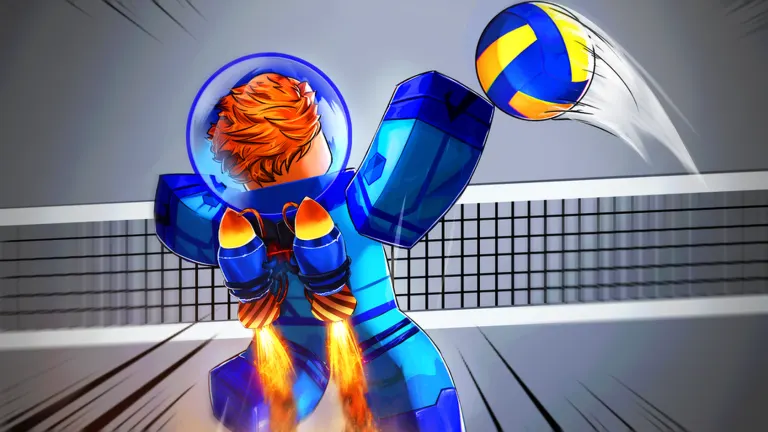
Play Around Jinko's Strengths
Jinko's listed stats favor attacking and serving, with lower speed and setting ratings. That supports a playstyle centered on reaching a useful attacking position and choosing placement carefully.
These numbers are community estimates and have not been officially confirmed by the developers. Treat them as a broad description of the style, not measured performance guarantees.
| Stat | Listed estimate | Practical consideration |
|---|---|---|
| Spike | 100% | Attacking is a central strength |
| Jump | 100% | Supports the style's attacking role |
| Serve | Above 100% | Includes a distinctive curve mechanic |
| Spin | Above 100% | Reflects Jinko's curve-focused identity |
| Speed | 35% | Plan your positioning early |
| Set | 45% | Setting is a weaker listed area |
| Block, Bump, and Dive | 50% each | Defensive ratings are below its attacking ratings |
The high serve rating should not be read as proof of exceptional serve speed. The wiki describes Jinko's serve speed as closer to Sanju's than to a maximum-speed server such as Timeskip Kyamo.
Build pressure through placement and variation. A receiver who has seen several curved attacks may start moving early; occasionally attacking without tilt gives you another option. Watch where opponents actually stand before choosing the next shot.
Practice Toward Curve Mastery
Jinko's mastery challenges provide useful practice targets, but curve contacts and curve points are different goals. Early tiers ask you to spike with curve. The fifth tier specifically requires scoring with curve.
The table highlights the curve objective and one additional challenge at each tier. Each tier also has other requirements.
| Mastery tier | Curve objective | Another required challenge |
|---|---|---|
| Mastery 1 | Spike with curve 75 times | Win 10 games in 2v2 Ranked |
| Mastery 2 | Spike with curve 150 times | Earn MVP 20 times in Ranked |
| Mastery 3 | Spike with curve 250 times | Win 45 games in 3v3 Ranked |
| Mastery 4 | Spike with curve 400 times | Win 100 games in 2v2 Ranked |
| Mastery 5 | Score with curve 250 times | Win 185 games in Ranked |
A useful training order is basic side curve, front-court cuts, backward-tilt adjustments, and then serve variation. This separates the mechanics enough that you can recognize which one needs work.
During early practice, focus on making the intended contact and landing inside your target area. Once that becomes dependable, add a decision: choose between a short cut and a deeper attack based on the receiver's position.
When practicing with a setter, agree on a repeatable setup before experimenting with wider sets and delayed hits. Consistent setups help you distinguish a timing problem from a curve-control problem.
Do not turn every ranked rally into a mastery attempt. The challenge lists also include wins, assists, bumps, aces, and MVP finishes. Choosing a sensible shot for the rally supports those broader goals while letting curve opportunities develop naturally.
FAQ
What should I learn first?
For volleyball legends jinko tech, start with reliable side-tilt placement and the relationship between power and curve. Add forward-and-side cuts next, then practice backward tilt as an alternative when defenders anticipate the short ball.
What do Advanced Controls change?
Advanced Controls let you influence spike curve through power adjustment. Lower power applies more curve. Directional tilt still determines the type of curve you are attempting, so learn power control alongside consistent aiming and contact position.
Why does my Jinko curve look weaker than an older demonstration?
An August 30, 2025 balance change reduced Curveball spin when using Advanced Controls. Your power setting, tilt combination, and facing direction also affect the result. Compare attempts from the same setup before deciding that the technique itself is failing.
Should every Jinko attack use curve?
No. Community advice recommends varying your attacks and occasionally using no tilt. Repeating one curve pattern makes your choices easier to anticipate. Use cuts, backspin, and un-tilted attacks according to the space defenders leave open.
Does backward tilt always target the back line?
No. Backward tilt applies backspin, and its effect depends on your facing direction. Players recommend it as an adjustment when targeting deeper space against defenders expecting a cut, but you still need to aim and practice the landing.